

ABOUT
Whooping Cough Day on November 8 shines a spotlight on the threat posed by whooping cough and the simple ways people can remain protected throughout life.
Supported by the theme of “Stay Up-To-Date. Vaccinate,” this Whooping Cough Day we are asking Australians to have a conversation with friends, family or colleagues about the importance of adult, pregnancy and childhood whooping cough protection. Help us raise awareness on Sunday, 8 November for #WhoopingCoughDay 2026.
Why Whooping Cough?
Whooping cough is a highly infectious bacterial infection that attacks the airways, causing uncontrollable coughing and difficulty breathing, sometimes for months on end. Whooping cough can be fatal in babies.
While vaccination during pregnancy has helped reduce infant deaths, whooping cough can also cause serious illness in older children and adults.
With booster shots required throughout life, our hope is that Australians will take action to remain up-to-date with whooping cough vaccination.
We all have a role to play in controlling the spread of whooping cough and reducing the risk of infection, no matter our age.


VIDEOS AND PODCAST

Educational Video - Whooping Cough
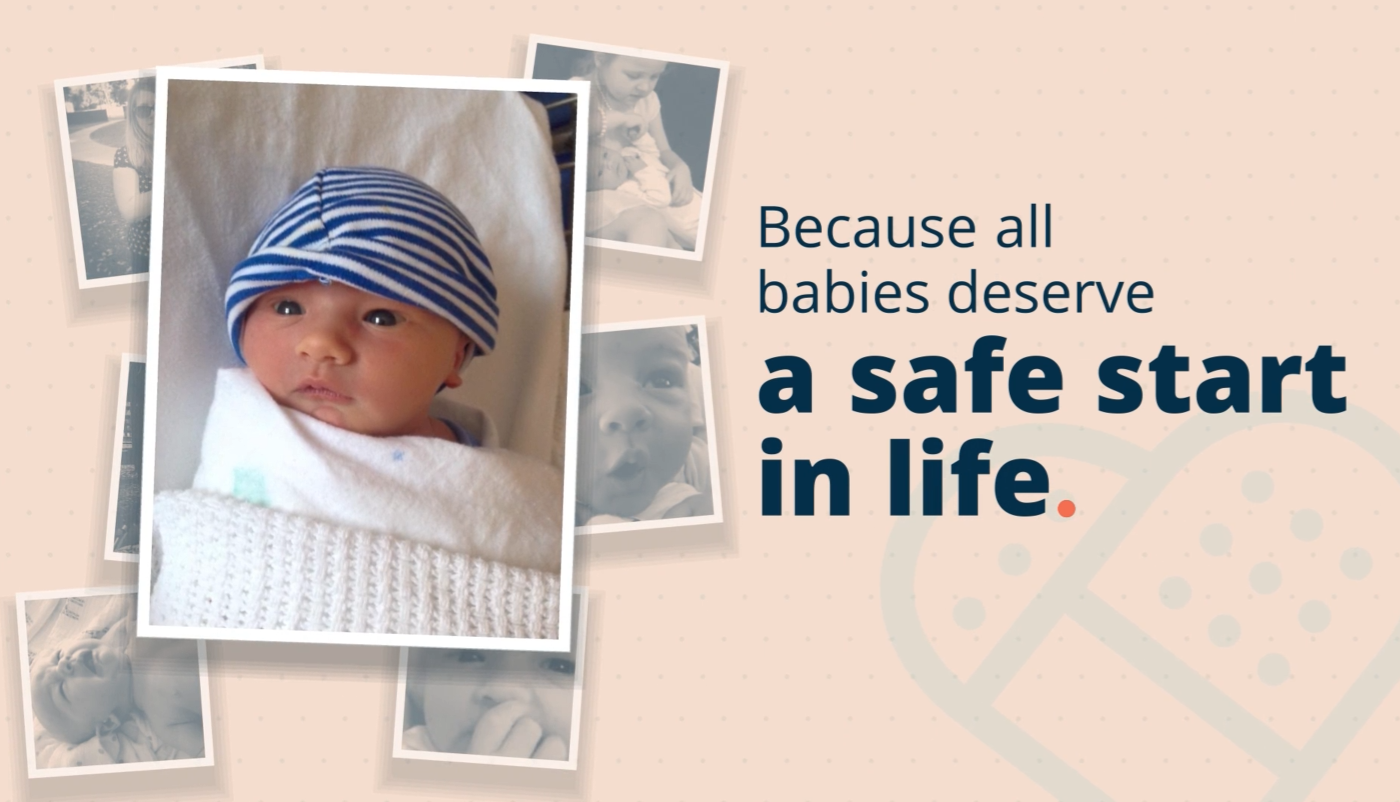
Riley’s Whooping Cough Story
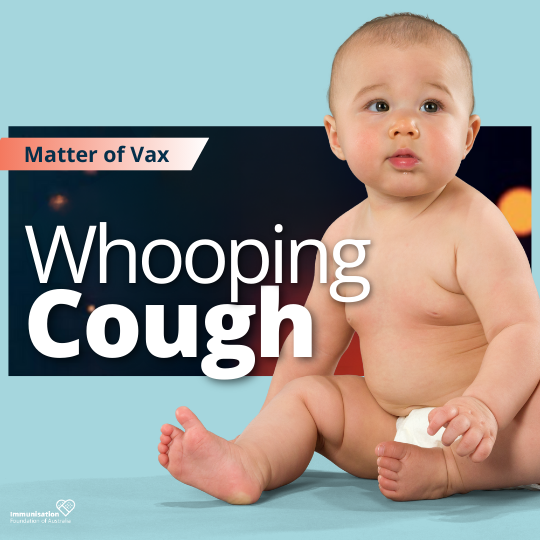
Podcast - Whooping Cough (Pertussis) with Professor Tom Snelling

STORIES


THE FACTS
-
Known medically as pertussis, whooping cough is a highly infectious and potentially fatal bacterial infection that attacks the airways, causing uncontrollable coughing and difficulty breathing.
Often referred to as the ‘100-day cough,’ whooping cough can cause rapid, violent, and uncontrolled coughing fits until all air is gone from the lungs. These coughing fits can last for months and can be so severe that they cause vomiting, incontinence, broken ribs and hospitalisation.
-
Australia is in the grip of a whooping cough epidemic, more than 8,000 cases have been reported in Australia so far in 2026. Epidemics of whooping cough occur in cycles and may persist for several years.
Other parts of the world are also experiencing outbreaks of whooping cough.
-
Whooping cough is more contagious than influenza, measles or COVID-19 and, once infected, a person can remain contagious for three weeks or until they receive a course of antibiotics.
Symptoms of whooping cough don’t appear immediately (often for a week or more following infections), so an infected person may unwittingly spread whooping cough to up to 17 unvaccinated people.
-
Whooping cough can be fatal in infants and can cause serious illness in older children and adults.
In Australia this year, a quarter of confirmed cases of whooping cough are in adults. Pre-teens and young teenagers are also at risk.
-
While whooping cough is most serious in infants, some older children and adults are at a higher risk of severe illness. People with asthma face are more than three times as likely to be diagnosed with whooping cough, and more likely to have complications.
-
Whooping cough vaccination offers the best defence against this highly contagious disease for the person vaccinated and their loved ones.
Babies are at greatest risk of severe whooping cough and immunisation of pregnant women offers the baby protection until it can receive its own vaccine schedule from six weeks of age.
The best way for older children and adults to protect themselves and loved ones from whooping cough is to remain protected with booster vaccines.
-
Vaccinations for whooping cough have been used for more than 100 years, with billions of doses administered globally. Last year alone, more than 115 million infants were vaccinated against whooping cough worldwide.
Side effects are closely monitored, and ongoing research shows that currently available whooping cough vaccines are very safe across broad populations. In fact, recent research involving more than 40,000 pregnant women found only mild side effects such as pain or redness at the injection site.
-
Having whooping cough does not leave you immune and while vaccination is the best defence against the bacteria, protection does wane over time. A whooping cough booster at least every 10 years is a safe and effective way to bolster protection.
In Australia, the whooping cough booster comes as a combination vaccine that also protects against diphtheria and tetanus, both of which also require boosters at least every 10 years to remain effective. -
While vaccination is especially important for babies, pregnant women and people who are in contact with infants, we all have a role to play in controlling the spread of whooping cough and reducing the risk of infection.
The risks posed by whooping cough are compounded by a reduction in the number of Australians receiving booster vaccination. More than 13 per cent of Australian adolescents are skipping their free school-based whooping cough booster, a figure which has increased since 2021.
Booster uptake in adults is even lower. Most adults cannot recall having received a whooping cough booster, with only one-in-five Australian adults aged over 50 years up-to-date with whooping cough vaccination. -
Australians can check their vaccination status by talking to a doctor, pharmacist or by accessing their Immunisation History Statement via the myGov app or website.
STAY UP-TO-DATE

Having whooping cough does not leave you immune and while vaccination is the best defence against the bacteria, protection does wane over time.
A whooping cough booster at least every 10 years is a safe and effective way to bolster protection.
You can find out if you’re up-to-date with your whooping cough vaccines by:
✔️ Talking with your GP
✔️ Talking with your pharmacist
✔️ Accessing your Immunisation History Statement via the myGov app or website
DONATE

The Immunisation Foundation of Australia is pleased to present the Riley Hughes Memorial Award to support whooping cough-related research efforts.
The Award supports Australian researchers to better understand the disease, contribute to more effective treatments and vaccines, and ultimately prevent unnecessary suffering and loss of life.
This Award is in honour of young Riley Hughes, son of IFA co-founders Catherine and Greg Hughes, who passed away from whooping cough at the age of four weeks. You can read more about Riley’s story here.
All donations over $2 are tax deductible.
GET SOCIAL
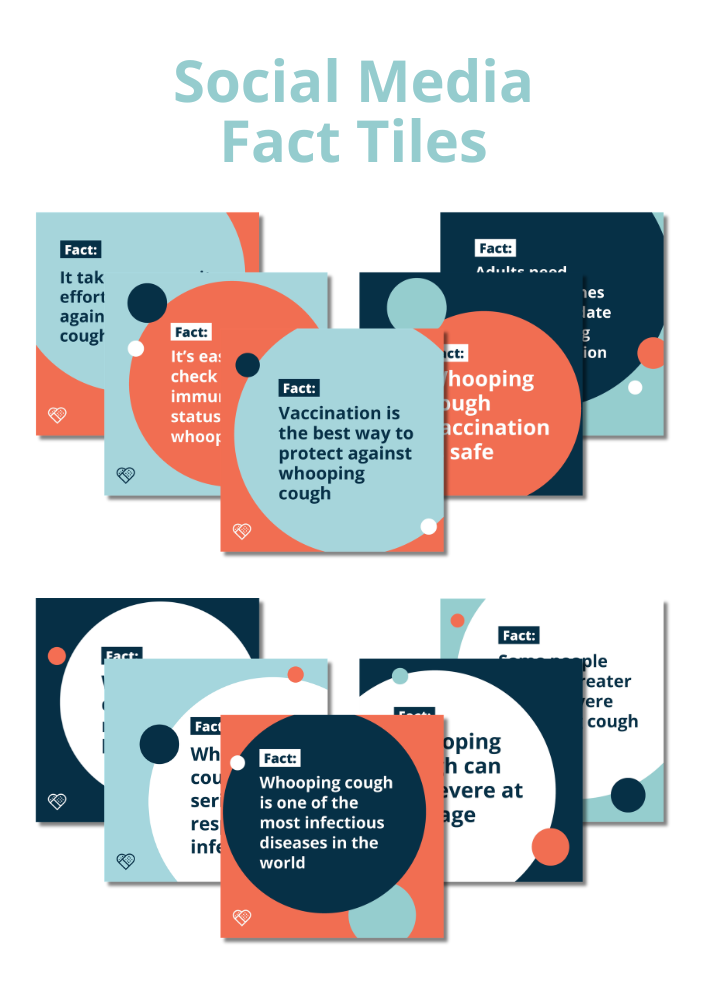
Using the #WhoopingCoughDay hashtag, please feel free to share our poster, video, flyer or facts on social media.
Did you get vaccinated on #WhoopingCoughDay? Share your experience on social media!